Red clayServices
From the first foot of clay to the faucet.
Their own home page lists four things: residential water wells, irrigation wells, pump repair and water treatments. Here’s what each one covers.
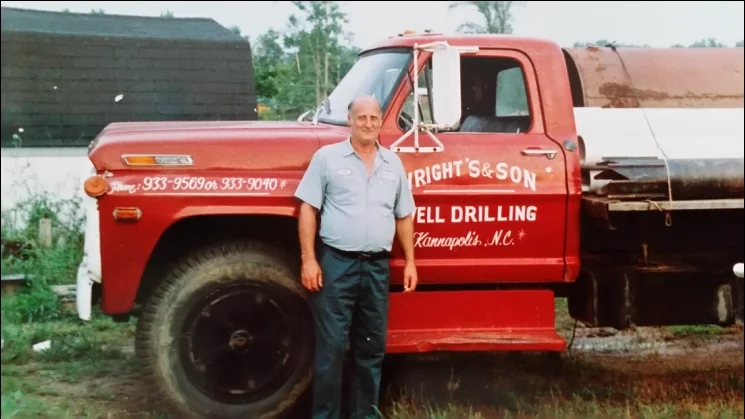
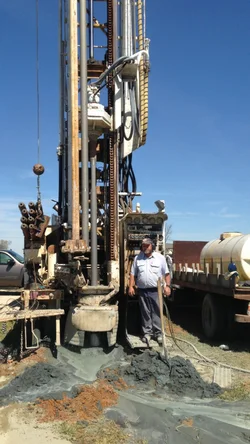
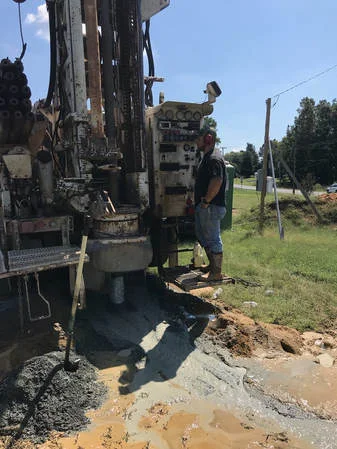
SaproliteThe old truck and the new rig
Wright’s & Son became Wright Well & Pump. The family didn’t change.
“Wright Well and Pump is owned and operated by Danny Wright, who is a third generation well driller. The company began 40 years ago, when Will “Stub” Wright decided to drill wells. He passed the company down to his son, Lee Arthur “Bud” Wright, who then made well drilling a full time job with his son Danny.”
From the About page of their own website
GraniteIn customers’ words
“As honest as they come.”
Word for word, from the reviews page of their own website.
“Danny is as honest as they come. He gives good service at a fair price and unlike the other people in the industry he actually cares about the little guy.”
“Danny was efficient and timely in his response and repair of my well. Also at a more reasonable price than my initial quote. 5 Stars.”
“Danny and his guys were awesome!! Had our well fixed quickly. Good people and great service at a fair price! Thanks again guys!!”
“Awesome, prompt, courteous!!!! I would recommend y'all in a heartbeat!!! Thank you so very much! We were desperate and God sent us an angel or two!”
“Excellent service, work ethics, customer service....highly recommended!!!”
“This company gets 5 stars from me!”
FractureKnow your ground
Red clay on top. Two kinds of rock below.
Every well around here starts in Piedmont red clay and soft, weathered rock. What’s under that depends on where you live, and it changes how deep a well goes and what the water carries.
Granite country
The Charlotte terrane: red clay over granite-type rock, around Kannapolis, Concord, Salisbury, Mooresville and Mecklenburg.
The Slate Belt
Ancient volcanic rock to the east and south: Stanly and Union counties and the eastern edges of Cabarrus and Rowan.
WaterHow a call goes
Find the real cause. Fix it at a fair price.
“Most of the work we do here at Wright Well & Pump is pump repair and maintenance.” Pumps usually fade before they fail, so the symptoms tell the story.
John 4:14
But whosoever drinketh of the water that I shall give him shall never thirst; but the water that I shall give him shall be in him a well of water springing up into everlasting life.
Call the shop
Tell them what the water is doing: nothing at all, low pressure, a clicking switch, rusty stains. If the pump’s breaker keeps tripping, leave it off.
Find the real cause
Pump, switch, tank, wiring or the well itself. Pumps usually decline slowly, so the symptoms tell a story.
A fair price first
You hear what’s wrong and what it will cost before the work starts. Customers keep using the same words: honest, and a fair price.
Water back on
Repaired, tested and explained, with advice on what to watch for next.
TopsoilService area
Six counties around Kannapolis.
Cabarrus, Rowan, Mecklenburg, Iredell, Stanly and Union counties, “and other surrounding areas,” as their own site puts it.
Full service areaRed clayStraight answers
Well water questions.
I have no water from my well. What should I check first?
Check the breaker for the well pump in your electrical panel. If it has tripped, reset it once. If it trips again, leave it off and call (704) 933-9040.
What does a well pressure tank do?
A pressure tank stores water under air pressure so your pump doesn’t have to start every time someone opens a tap.
How deep are wells around Kannapolis and Charlotte?
Most drilled household wells in this part of the North Carolina Piedmont are a few hundred feet deep, but there’s no fixed number: the well goes as deep as it takes to cross enough water-bearing fractures.
How often should I test my well water?
At least once a year for bacteria, and any time the water changes in color, taste or smell, after a flood, or after well repairs.
Can my well run dry in a drought?
It can, especially if it’s a low-yield or shallower well. Deep wells in fractured rock usually hold up better, but long droughts lower water levels across the Piedmont.